Most riders focus on exercises.
But the real difference between a young horse and a Grand Prix horse is something much simpler: balance.
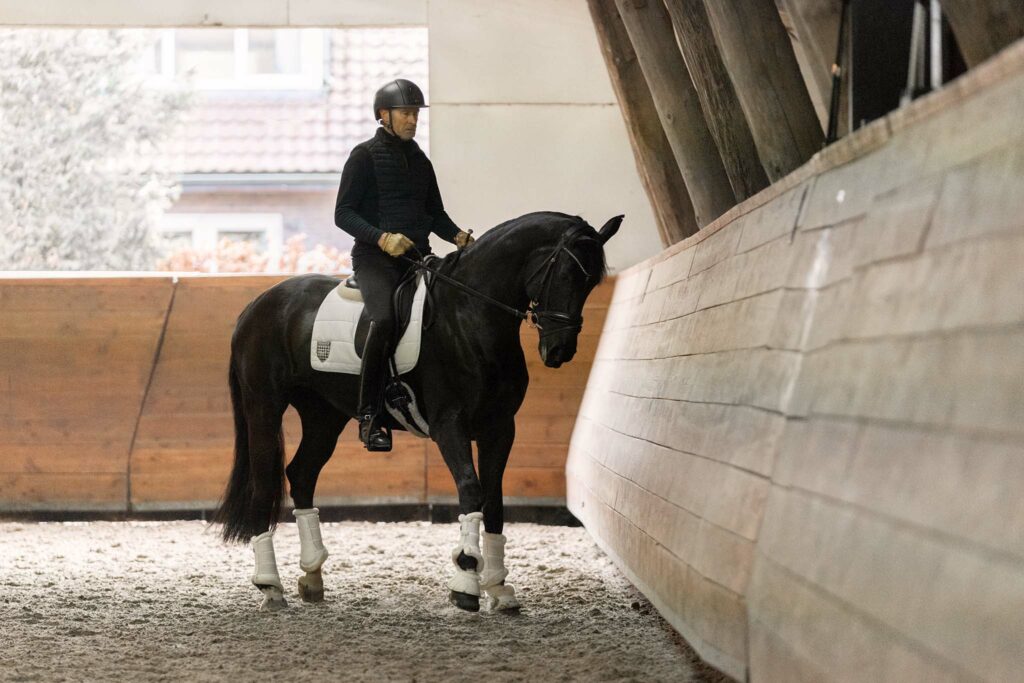
A rider with a Grand Prix horse has the balance of the horse under control. That means the horse is able to shift more weight from the front end to the hindquarters, creating a more even distribution over all four legs.
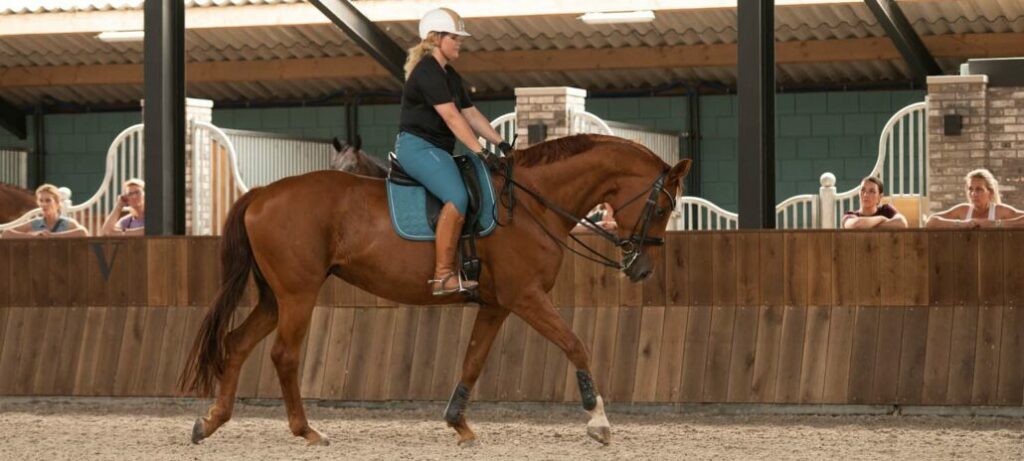
However, a young horse naturally carries more weight on the forehand.
That is simply their natural posture. Their natural balance.
Even though this is the preferred posture of a young horse, it doesn’t mean they are not capable of carrying more weight behind.
You’ve probably seen it before: a horse cantering towards a fence, and just when you think he won’t be able to stop, he suddenly does. In that moment, the hind legs take over a large part of the weight.
A young horse naturally carries more weight on the forehand. That is its natural posture. Its natural balance.
But this is exactly what we want to achieve under saddle.
We want the horse to shift more weight onto the hind legs in response to our aids. Not only in extreme situations, but throughout the entire training.
In the whole training process, you are constantly working on controlling and improving the balance of the horse.
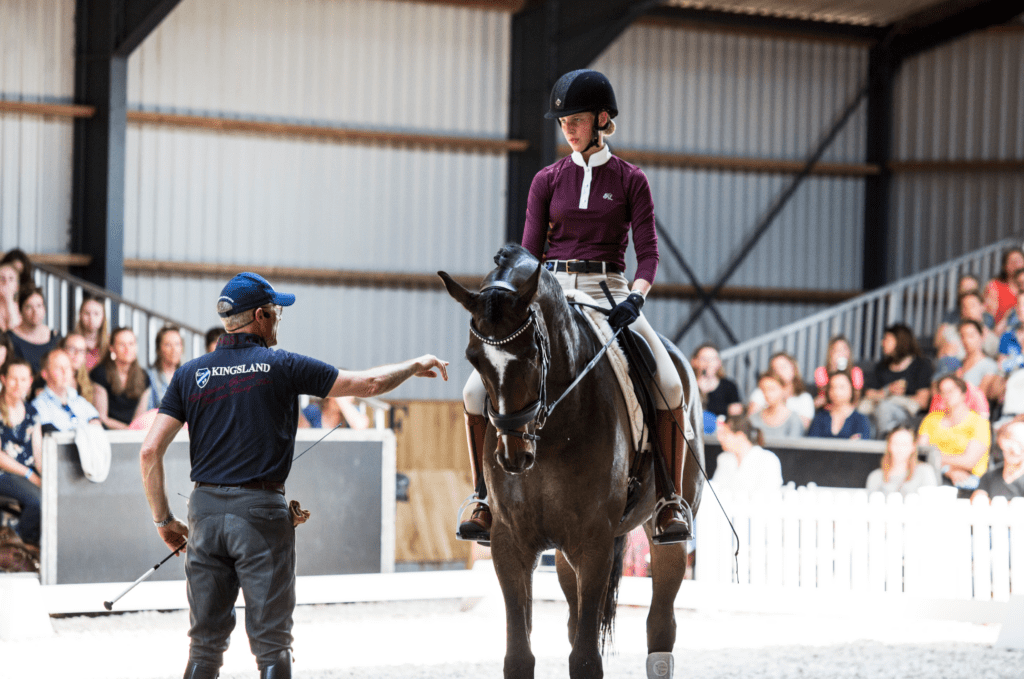
In the video below, Rien van der Schaft explains the three phases of balance every rider goes through.